
Books for learning all about the world
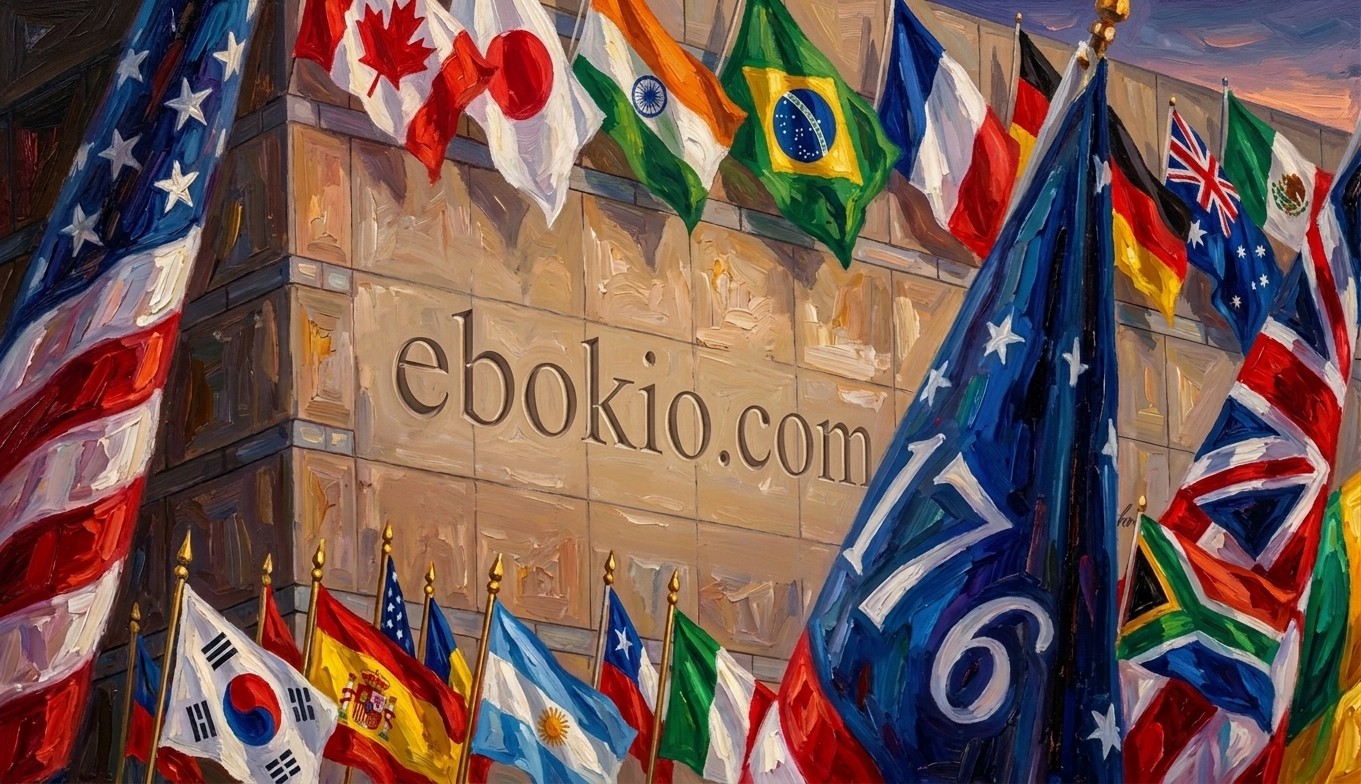
Books for learning all about the world — curated roadmaps, recent picks (2024–2026) and how Ebokio’s ebooks and tools speed learning. Explore now.
If you want to relearn world history or go beyond what you were taught at school, the right books make all the difference. This guide groups the best single-volume syntheses, thematic works and recent scholarship, and shows how Ebokio’s platform helps you discover, read and retain what you learn.
Why read history books beyond school
School syllabuses introduce timelines and national narratives, but they often skip cross-regional themes: global trade, environmental change, migration and comparative empires. Recent editorial roundups and prize lists emphasise long-form global synthesis and fresh perspectives emerging in 2024–2026 — ideal entry points for readers seeking modern, balanced accounts. See examples from History.com and Smithsonian Magazine for 2025 selections.
How to choose books that rebuild your world view
Choose books with complementary aims rather than duplicates. A practical learning set includes: a single-volume panorama, 2–3 thematic studies, and a recent specialised book that challenges familiar narratives.
What each book should deliver
- Panorama: clear chronology and big-picture connections.
- Thematics: focused treatment of trade, disease, empire, environment or migration.
- Revisionist/Contemporary: recent scholarship or contrarian takes that revise school-taught ideas.
Recommended reading roadmaps
Below are compact, sequenced lists you can follow. Each roadmap is designed for steady progress: start with the broad sweep, deepen with themes, then read recent scholarship.
Complete beginner (6 books, one-term plan)
- One-volume global history (synthesiser) — to set the timeline and frame.
- Prehistory to classical era overview — context for ancient societies.
- History of trade and exchange — how goods and ideas moved.
- History of empire and colonialism — power, governance and resistance.
- Environment and disease in world history — long-term impacts.
- A recent prize-winning or widely reviewed 2024–2026 title that reframes a major topic.
Refresher (4 books, spring reading)
- Single-volume world history synthesis.
- A thematic book on empire or globalisation.
- A modern history of ideas or revolutions.
- A recent skeptical or revisionist title to challenge assumptions.
Deep dive (8+ books, self-led course)
- Panorama.
- Prehistory and early civilisations.
- Classical and medieval comparative studies.
- Trade, maritime history and networks.
- Empires and colonial systems.
- Global environmental history.
- Modern political transformations (19th–20th century).
- Primary-source collections and academic journals for close study.
Notable titles and why they matter (2024–2026 outlook)
Editorial lists in 2025 highlighted global syntheses and books that reshape narratives. Use these lists to find recent, well-reviewed titles: History.com , Smithsonian Magazine and curated lists at FiveBooks . These roundups point to accessible yet authoritative books useful for learners and general readers.
Why ebooks and tools speed learning
Ebooks let you search text, highlight passages, collect notes and replay read-aloud audio — features that improve retention and speed review. In the UK, ebook unit sales rose to about 46 million in 2024, underlining reader appetite for digital formats ( FDA Yearbook 2025 ).
How Ebokio helps you learn the world
Ebokio is an online ebook store and digital reading platform designed for discovery and study. The platform combines curated categories, AI-powered recommendations, affordable pricing and premium reading features such as read-aloud and highlightable text — all useful when rebuilding or extending your world-history knowledge ( Ebokio ).
Discovery and curation
Ebokio organises titles into curator-led lists and learning pathways, so you can follow the roadmaps above without hunting across multiple sites. Curated lists bring together panoramic histories, thematic works and new releases flagged by editorial picks.
AI recommendations that respect reading goals
Rather than relying only on sales rank, Ebokio’s AI suggestions combine editorial signals and your reading preferences to recommend complementary books — for example, a synthesis followed by a thematic deep dive. This focus on learning sequences differs from larger marketplaces that favour popularity metrics.
Study-friendly reading features
- Read-aloud: listen to chapters while commuting; ideal for absorbing dense material.
- Highlights and notes: build a study dossier across multiple titles.
- Searchable text: jump to concepts and quotations fast.
Try before you commit
Ebokio lets you sample ebooks and preview chapters on the web reader, so you can test the author’s voice and structure before buying. Use the web reader to compare two competing syntheses side by side via Ebokio Reader .
Feature comparison: Ebokio vs larger marketplaces
Larger retailers provide wide inventory and aggressive discounts. Ebokio focuses the experience: curated learning pathways, AI tuned for education, easy sampling and study tools built into the reading experience. For learners who value sequenced study and retention features, Ebokio’s approach reduces friction and helps complete a reading roadmap.
Building a personal syllabus on Ebokio
Practical steps:
- Pick a learning profile (Beginner, Refresher, Deep Dive).
- Use curated lists to select a panorama + 2–3 thematic titles.
- Sample chapters in the reader; use read-aloud to test pace.
- Highlight and export notes as you go for revision.
Ebokio’s membership, Ebokio Plus , adds further value for regular learners through tailored offers and priority picks.
Frequently asked questions
How should I start relearning world history if I only remember school basics?
Begin with a single-volume synthesis to regain a timeline. Add two thematic books (trade and empire, or disease and environment). Use Ebokio’s curated beginner lists and AI recommendations to build an affordable, ordered reading plan ( Ebokio ).
Are ebooks good for serious history study?
Yes. Ebooks offer search, highlighting, exportable notes and read-aloud features that support study. UK ebook sales grew in 2024, showing readers increasingly use digital formats for learning ( FDA Yearbook 2025 ).
How do Ebokio’s recommendation features compare to larger platforms?
Ebokio combines editorial curation with AI tuned to learning outcomes, rather than prioritising popularity alone. That produces more coherent reading sequences for learners and helps surface contrarian or specialist titles alongside bestsellers.
Notes
Fact sources include editorial lists from 2025–2026 and UK market reports cited above. Before purchasing, preview the exact edition on Ebokio: publication details and year can change and matter for citation. Use the reader to sample and confirm the book’s level and approach before committing.
Conclusion
Relearning world history is a manageable, rewarding project when you combine the right books with study tools. Ebokio’s curated lists, AI recommendations and reading features make discovery and revision faster — explore curated history ebooks and start your reading roadmap at Ebokio’s ebook store .
Related articles
- 2027 Is Closer Than You Think: The Ebook Revolution Readers Are Waiting For – 1.1 billion ebook readers by 2027. Explore the adaptive ebooks, text-audio fusion, and accessibility standards reshaping digital reading, and how EBOKIO...
- The eReader for People Who Gave Up on eBooks – Hate eReaders? The problem is usually the store, the DRM, or the price — not the screen. Five objections tested, and the reader that answers them without...
- Die besten Liebesromane, empfohlen im Jahr 2026 – Die besten Liebesromane 2026: Kuratierte Empfehlungen, Trends und wie Sie Titel auf Ebokio finden. Jetzt entdecken und Leseproben, TTS und Deals prüfen.
- Wie Sie jederzeit und auf jedem Gerät Bücher lesen können – Auf jedem Gerät Bücher lesen: Entdecken Sie den Ebokio Web‑Reader, TTS und Sync‑Features für sofortigen Zugriff. Jetzt testen und Bücher überall genießen.
Ebooks to explore
- America Then & Now by Nityanand Sumant Bhadra
- Die Buchhandlung am Ende des Deichs by Alexander wulf
- Rasputin by Nityanand Sumant Bhadra
- More History & Politics ebooks
EBOKIO LTD · Registered in England and Wales · Company No. 17308940 · Registered office: 128 City Road, London EC1V 2NX, United Kingdom